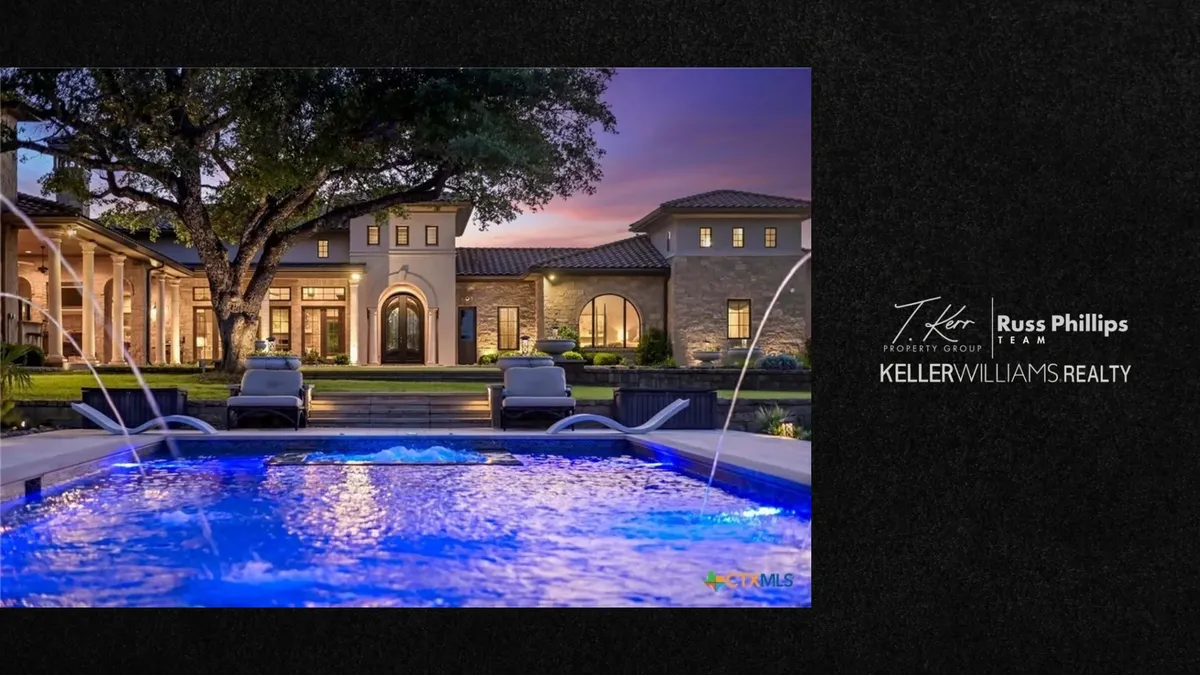
How to Sell a Luxury Home in Georgetown, Texas
How to Sell a Luxury Home in Georgetown, Texas
Knowing how to sell a luxury home in Georgetown TX requires more than beautiful photography and an impressive list of features. Luxury buyers are purchasing a complete experience: architecture, land, privacy, finish quality, outdoor living, location, and confidence that the property justifies its price.
That confidence must be built before the first showing. The home has to be prepared with precision, priced against its true competitors, documented carefully, and marketed to buyers who may live across Central Texas or across the country.
Georgetown’s luxury market is still moving in 2026, but it is not forgiving. Affluent buyers can afford to act, yet they are not willing to overpay simply because they can. The luxury properties that sell are the ones that make their value unmistakable.
What Is Happening in the Georgetown Luxury Market?
Our September 2026 analysis of Austin Board of REALTORS® MLS data found that Williamson County homes priced at $1 million and above sold in a median of 50 days. That was five days faster than the county market overall and 34 days faster than the luxury segment in September 2025.
Median price per square foot in the $1 million-plus segment increased approximately 3% year over year, while the countywide figure declined 3.8%.
There were fewer luxury sales than a year earlier, so these figures should be interpreted with appropriate caution. Luxury data sets are smaller, and a shift in the mix of properties can affect monthly results. Still, the direction is meaningful: the luxury homes that sold moved faster and held price per square foot better than the overall county market.
Why? Luxury buyers are sometimes less sensitive to mortgage-rate changes because they may use cash, make substantial down payments, or bring significant equity from another property. They are also seeking features that are difficult to reproduce, including usable acreage, privacy, mature trees, custom architecture, expansive outdoor living, and proximity to Georgetown’s amenities.
Financial capacity does not eliminate value awareness. Luxury buyers often have broad options, and they tend to recognize quality quickly. A property must compete with other luxury resales, custom homes, and new construction while offering a clear reason to choose it.
How to Sell a Luxury Home in Georgetown TX
Luxury marketing begins with positioning. Before choosing a list price or scheduling photography, we determine who is most likely to value the property and which features will matter most to that buyer.
For one property, the central story may be architectural quality and refined interiors. For another, it may be a full acre with privacy close to town. A third may compete through a resort-style pool, guest accommodations, workshop space, views, or flexibility for multigenerational living.
The strategy should align five elements:
Preparation: Make the property feel cared for and ready for serious evaluation.
Pricing: Compare it with the homes a qualified buyer will actually consider.
Presentation: Translate scale, quality, land, and lifestyle into accurate visual storytelling.
Distribution: Reach local, regional, relocation, and agent audiences in the channels they use.
Follow-through: Respond quickly, communicate material information, and convert interest into a confident offer.
When one element conflicts with the others, buyers feel it. Dramatic marketing cannot rescue an unsupported price. A competitive price cannot fully overcome neglected preparation. Excellent photography cannot answer unanswered questions about a well, septic system, exemption, easement, or major home system.
Why Luxury Marketing Is Different
Luxury marketing requires an extra eye for detail because the buyer is evaluating details at every stage.
The preparation plan may include staging, repairs, paint refinement, specialty cleaning, window care, landscaping, lighting adjustments, pool service, and removal of visual distractions. We also consider how the property will appear in still photography, video, drone imagery, floor plans, social media, print materials, and private agent outreach.
Professional photography should communicate more than room dimensions. It should show sightlines, material quality, ceiling height, indoor-outdoor connections, privacy, and the relationship between the home and land. Drone work can be valuable for acreage, views, outbuildings, neighboring context, and proximity, but it should clarify the property rather than simply look cinematic.
Video should have a purpose. A strong property film guides the viewer through the experience of arriving, entering, entertaining, relaxing, and moving through the grounds. Short-form video can create discovery, while longer video helps a relocating buyer understand the home before planning a trip.
Distribution must extend beyond uploading the listing to the MLS. Depending on the property, it may include targeted database outreach, direct communication with agents who represent likely buyers, relocation exposure, digital campaigns, editorial storytelling, open-house events, and strategic follow-up with every engaged party.
Fair housing obligations apply at every price point and across all marketing channels. Advertising should describe the property, its objective features, and its location without expressing preferences about who should live there. The U.S. Department of Housing and Urban Development explains protections under the Fair Housing Act.
What Luxury Buyers Expect in 2026
Luxury buyers are not one group, but they commonly expect clarity, quality, and convenience.
They want accurate information about major systems and improvements. They may ask about roof age, HVAC capacity, energy costs, smart-home technology, internet service, water systems, pool equipment, landscape irrigation, generator capacity, security features, and the quality or transferability of warranties.
They also evaluate whether the home functions as beautifully as it photographs. Storage, parking, pantry capacity, laundry design, guest privacy, work-from-home space, outdoor shade, noise, and traffic patterns can materially influence the decision.
For buyers relocating to Georgetown, context matters. Marketing can objectively explain access to major roadways, airports, healthcare, dining, recreation, and employers. It should not make assumptions about the buyer or characterize an area in ways that could imply a preference for a protected class.
The best luxury presentation anticipates legitimate questions and makes the property easier to evaluate.
Selling a Georgetown Home on One Acre or More
Land comes with homework. Acreage can be a major advantage, but buyers need to understand how the property works.
Septic Systems
Gather permits, maintenance records, service agreements, and available design information. Consider an inspection before listing so defects can be addressed or disclosed appropriately. Buyers may want to know the system’s type, location, capacity, and relationship to future improvements. The Texas Commission on Environmental Quality provides guidance for homeowners selling a property with an on-site sewage facility.
Wells and Water
If the property uses a private well, collect drilling records, service history, and any available testing information. Buyers may request water-quality testing, flow or production information, and details about treatment equipment. Avoid making unsupported promises about future capacity. Sellers can begin with TCEQ resources for finding information about water wells in Texas.
Surveys, Easements, and Boundaries
A current survey can identify boundary lines, improvements, easements, encroachments, and access. Acreage buyers may scrutinize fences, driveways, utility placements, shared access, drainage, and whether additions cross restricted areas.
Agricultural or Wildlife Valuation
If the land receives agricultural or wildlife special valuation, sellers should gather the relevant records and encourage buyers to consult the county appraisal district and qualified tax professionals. Eligibility, continuation requirements, rollback taxes, and future use depend on the specific facts. The Texas Comptroller explains agricultural, timberland, and wildlife management special appraisal and provides related qualification resources. It is better to explain the questions than to promise a tax outcome.
Future Development and Land Use
Nearby development, road projects, utility expansion, zoning, deed restrictions, and municipal boundaries can influence how buyers view acreage. Sellers should disclose known material information and provide available documentation without speculating about unapproved plans.
Internet, Utilities, and Insurance
Verify available internet service, utility providers, propane equipment, water sources, drainage systems, and insurance considerations. These practical items can determine whether a buyer’s intended use is feasible.
Addressing acreage questions before listing reduces uncertainty during the option period and lowers the risk that a preventable surprise will delay or derail the transaction.
When Is the Best Time to Sell an Acreage Home?
Spring is not the only strong season for Georgetown luxury and acreage homes. Properties on one acre or more can show beautifully in the fall, when temperatures are more comfortable and buyers can spend time walking the land, exploring outdoor living areas, and appreciating privacy.
The ideal date depends on landscaping, trees, pool presentation, drainage, competing inventory, buyer activity, and the seller’s timeline. A wooded property may be compelling in autumn. A home built around a pool may make its strongest first impression during warmer months. A property with extensive gardens may benefit from a carefully planned spring launch.
We also consider the preparation runway. Rushing to meet a generic seasonal deadline can be more damaging than launching several weeks later with the property, documentation, and marketing fully ready.
The Highest-Return Work Before Listing
There is no single renovation that produces the best return for every luxury home. The highest-return decision is usually a coordinated plan that corrects the issues most likely to reduce buyer confidence.
That may include repairing visible maintenance, improving the approach and landscaping, neutralizing highly personal finishes, refinishing a worn surface, servicing major systems, or elevating furnishings and lighting. In other cases, the smartest recommendation is to avoid a major renovation and price the property with its current condition in mind.
We prioritize work by asking:
Will buyers notice the issue immediately?
Will it make them question how the rest of the home was maintained?
Will it interfere with photography or the first showing?
Is it likely to appear during inspection?
Can it be corrected for less than the discount buyers may demand?
Does the improvement match the expectations of this price range?
Luxury preparation is not about making a home look generic. It is about allowing the architecture, land, craftsmanship, and strongest features to lead.
Case Study: Repositioning an Unsuccessful Luxury Listing
We recently took over a luxury property that had already been listed twice without selling. More time on market was not going to solve the underlying issue.
We applied a new preparation and presentation strategy, clarified the property’s value, and returned to market at a more competitive price. The relaunch generated multiple offers, secured a contract in under two weeks, and ultimately produced a sale price above the amount at which the home had previously been listed.
This result illustrates an important distinction. Reducing a price without changing the strategy may look like retreat. Repositioning a home means aligning the price, condition, presentation, audience, and follow-up so buyers see a new and more persuasive opportunity.
The agent and team a luxury seller chooses can materially affect that alignment.
Georgetown Luxury Example: 216 Oak Valley Court
216 Oak Valley Court in Woodland Park offers a useful example of the features many Georgetown luxury buyers value. Built in 2017 by Century Communities, the single-story home includes four bedrooms and approximately 4,001 square feet on a full acre.
The outdoor environment is central to the property’s identity. A hot tub with an integrated fire-and-water wall and cascading water curtain sits beside a spacious cabana with a fireplace, dimmable lighting, a gas stub, and outdoor speakers. Travertine decking and mature trees create a setting designed for both entertaining and quiet enjoyment.
Inside, the home offers an open floor plan, two fireplaces, crown molding, a kitchen island, and a primary suite with a soaking tub and walk-in closet. The combination of one-story living, usable space, established trees, and a resort-style backyard demonstrates why preparation and visual storytelling matter in luxury marketing.
Property details and availability should be confirmed at the time of publication. Listed by T. Kerr Property Group, Keller Williams Realty Lone Star.
Frequently Asked Questions About Selling a Luxury Home in Georgetown
How long does it take to sell a luxury home in Georgetown?
Timing varies significantly because the number of qualified buyers is smaller and luxury properties are less interchangeable. Our September 2026 Williamson County analysis found a 50-day median for homes priced at $1 million and above, before the additional time required to close.
Do luxury homes need professional staging?
Not every property needs full staging, but every property needs intentional presentation. That may involve editing existing furnishings, bringing in selected pieces, adjusting art and lighting, or staging vacant rooms so scale and function are clear.
Should I complete a pre-listing inspection?
It can be useful when the property has complex systems, acreage components, or maintenance questions that could interrupt a transaction. The decision should be made with your agent after considering disclosure obligations and the property’s condition.
How do you price a unique luxury property with few comparable sales?
We widen the analysis carefully, considering location, acreage, quality, age, improvements, utility, buyer alternatives, and market direction. We may compare several property components rather than relying on one supposedly perfect comparable.
Are luxury buyers affected by mortgage rates?
Some are less sensitive because they use cash, substantial equity, or larger down payments. Others still finance strategically. Regardless of financing, luxury buyers remain highly attentive to value and competing opportunities.
What documents should an acreage seller gather?
Useful records may include a survey, title information, septic permits and service records, well records and testing, utility information, warranties, receipts for major improvements, pool records, tax-valuation documents, deed restrictions, and known development or easement information.
Build a Luxury Selling Strategy Around the Property
If you are considering selling a luxury or acreage home in Georgetown, the first step should be a property-specific strategy session. We can evaluate the likely buyer, current competition, preparation priorities, pricing range, documentation, marketing plan, and estimated proceeds before the home enters the market.
About T. Kerr Property Group
T. Kerr Property Group is the #1 real estate team in Williamson County for both listings sold and buyers represented, based on Austin Board of REALTORS® MLS data for 2025 and 2026 year to date, excluding builders. The community has voted T. Kerr Property Group Georgetown’s #1 Real Estate Group in Georgetown’s Best three years in a row, and the team has been a top two finalist in Best of Round Rock for three consecutive years. Based in Georgetown, Texas, the team represents buyers and sellers throughout Georgetown, Round Rock, Leander, Cedar Park, and Central Texas. With more than 2,500 homes sold, over $1 billion in reported sales production, 800-plus five-star reviews, 65-plus years of combined experience, Platinum Top 50 recognition, and multiple Austin Business Journal Residential Real Estate Awards, T. Kerr Property Group combines sophisticated marketing with honest advice, fierce advocacy, and mission-centered service.
